
Read the Laurens Owner Record
Think of the owner-of-record card as a snapshot from the assessor's published tax digest. The name alone proves little. Read it beside the parcel number, tax year, situs address, mailing address, and legal description. Those fields make the owner line meaningful. Together they also flag when a same-name match is simply the wrong result. They catch a neighboring property too.
| Owner of record | Person, people, estate, trust, or entity named for tax administration |
|---|---|
| Parcel identifier | Literal tax and mapping key for the account |
| Mailing address | Destination selected for tax notices |
| Situs address | Physical property location, when assigned |
| Legal description | Short land description used to cross-check deeds and plats |
| Tax year | Time context for the displayed owner and value fields |
The assessor record has limits. It does not reproduce deed vesting language, and it cannot show whether the named person actually occupies the site. Treat the card as evidence of the county's current published tax roll, nothing more.
Check Laurens qPublic First
Begin with the Laurens County qPublic page, the county-linked source for tax parcel records. Use whatever search controls the live portal offers. Save everything the card shows. That includes the full owner name, parcel key, situs, mailing field, legal description, tax year, values, exemptions, and map link. The county publishes no fixed refresh interval for updates. So record the tax year shown rather than assuming one.
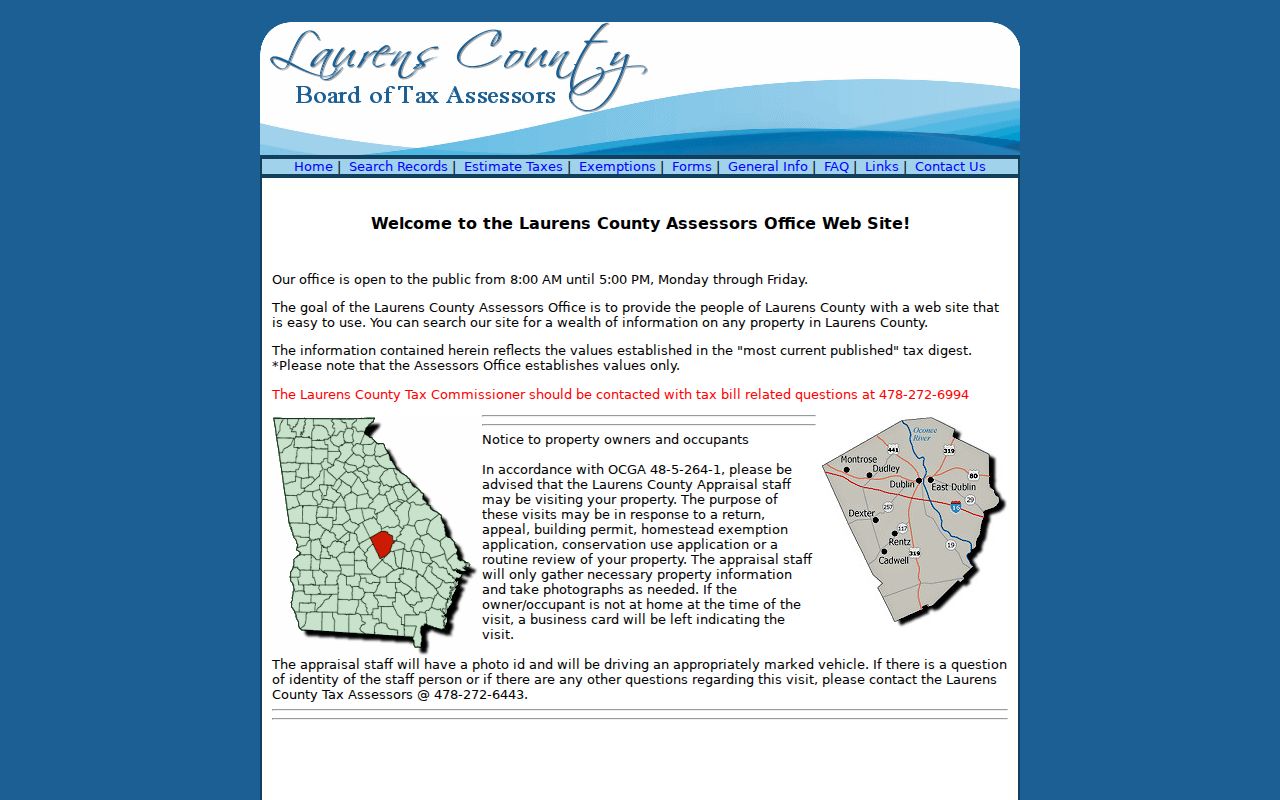
A vendor challenge can block the card. When that happens, call the Assessors Office at 478-272-6443, or request the same parcel-card fields electronically under the Georgia Open Records Act.
Confirm Who Owns Now
The latest recorded deed is the real check on the assessor name. Laurens County points modern deed research from 1990 forward to GSCCCA. Kofile covers an overlapping historical window from 1966 through 1998. For a present-owner question, start with GSCCCA and work from the newest likely conveyance.
- Copy the assessor owner name, parcel number, and legal-description clues.
- Search that name as grantee in the GSCCCA real-estate index.
- Compare recording date, document type, book and page, and property description.
- Check for a later deed, correction deed, estate deed, or other conveyance.
- Record the assessor tax year and the date the owner check was made.
- Owner of record
- The party named on the published assessor roll.
- Grantee
- The party receiving the interest in a deed.
- Vesting
- The recorded words describing how title is held.
- Registered agent
- An entity's official contact, not necessarily the land's beneficial owner.
Date the Laurens Owner Check
"Current" carries more than one date. Keep the deed execution date, the deed recording date, the assessor tax year or digest publication, and the date of your search separate. A signed sale may sit unindexed until recording. The assessor can keep showing the prior owner until its roll changes. The newest deed and the parcel card may disagree. Give both references to the Clerk's Deed Division and the Assessors Office. Never rewrite one source from the other; the discrepancy itself is useful evidence.
Verify Owner Names and Capacity
Search exact spellings first, then reasonable name variants. Joint owners, spouses, suffixes, middle names, and entities all shift results. For an LLC, compare the deed's grantee name with Georgia business records. A registered agent is a contact for the organization, not automatic proof of personal ownership. A trustee, executor, administrator, or estate representative acts in a stated capacity. Preserve that phrase. Probate records may establish the authority to sign. The deed shows the land instrument itself. Neither fact boils down to "this person owns it" without support.
Note: Match the parcel and land description first. Then treat two records with the same owner name as the same property.
Separate Mailing From Situs
The situs address locates the parcel. The mailing address routes tax notices. They differ when the owner lives elsewhere, uses a post office box, holds several properties, or receives mail through an entity, and neither field identifies every resident. Postal city is not the same as municipal limits. A Dublin mailing label can appear in several local routing patterns, so it cannot establish the city tax district. For that separate question, rely on the parcel, the GIS city-limit layer, and the tax district.
Reach a Laurens Property Owner
For a lawful property matter, write to the published tax mailing address and use the owner name. Keep the message neutral and parcel-specific. Do not assume the address is the person's home. Do not add protected data to it or use the record to pressure or harass anyone. Laurens County offers no official deed-fraud alert signup. An owner who spots an unexpected change should contact the Clerk's Deed Division and check GSCCCA and Kofile. Ignore unsolicited invoices claiming to be an official alert service.
Owner-of-record limit. A parcel-card name is not a title opinion and does not establish who occupies the property.
Request Existing Owner Data
When online access fails, ask the Assessors Office. Ask for the existing parcel card or the identified data fields. Name the parcel key, situs address, tax year, and the fields you want. Georgia's open-records rules cover computer-based records. Even so, an office need not build a new report. It need not run an analysis for you either. Request the record electronically as kept, and ask for a fee estimate up front.
For deed proof, give the Clerk the party names. Add the recording date, book and page. Note whether a certified copy is required. Index access, image access, and certification are separate services. A concise request works best. Ask for the current parcel card. Also request the owner, situs, mailing, parcel, legal-description, tax-year, value, exemption, and update fields already maintained for that account. That scope is far easier to process. It beats asking the office to decide who legally owns the land. Keep the response, any cost estimate, and the date received alongside your deed search.