
Identify a Laurens County Property Owner
Treat the street address as a locator only. What proves ownership is the parcel. The county tax parcel ties together the parcel key, the situs address, the owner field, the mailing field, the legal description, and the tax year, all in one place. Once the parcel points to a name, the newest deed tells you who received that same land as grantee.
- Search the address through the Laurens qPublic route and select the exact parcel.
- Copy the owner name, parcel number, situs address, legal description, and tax year.
- Search the owner as grantee in the GSCCCA real-estate index.
- Compare the newest deed's land description and recording date with the parcel card.
- For an entity, verify the exact organization name in Georgia's business records.
That is the whole method: two dated records, one answer. If the parcel card and the deed disagree, report the mismatch to the assessor or the Clerk rather than picking one side quietly.
Start With the Laurens Parcel Card
Laurens County uses qPublic as its current tax digest and parcel source. A complete parcel card carries the owner name, situs and mailing addresses, parcel identifier, legal description, tax year, fair market value, assessed value, exemptions, and a map link. The county publishes no stated refresh interval for those cards. Field labels and update timing can shift without notice. Start from the official entry point rather than a saved copy. The county assessor landing page appears below.
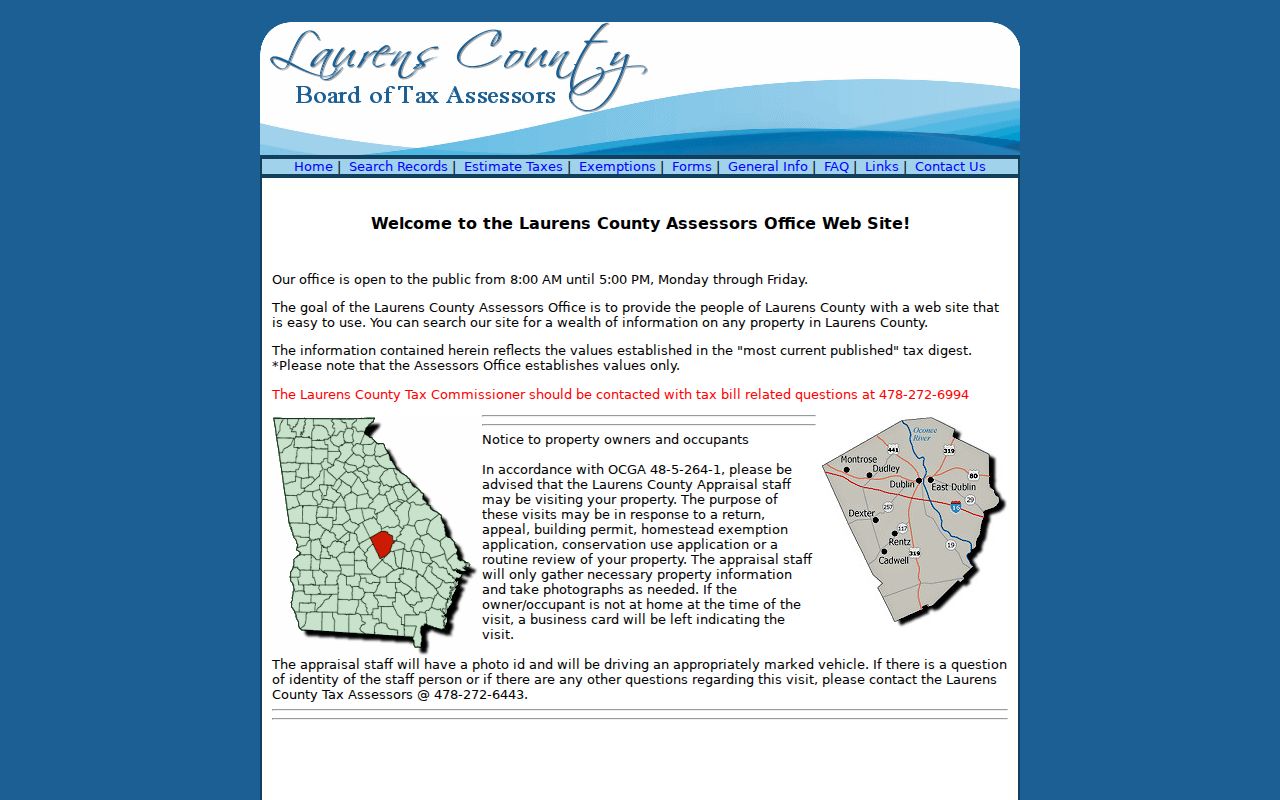
Begin with the official link every time. If a result will not open, the Assessors Office can supply the existing parcel card or the specific data fields you need.
Compare Laurens Ownership Sources
No single screen settles every ownership question. Each Laurens County source does one job on its own date with its own limits. The parcel number and legal description are the threads that keep every record tied to the same piece of ground.
| Source | Owner Information | Time Meaning |
|---|---|---|
| Assessor digest | Published owner, parcel, mailing field, tax year | Current published roll; no fixed lag documented |
| Recorded deed index | Grantor, grantee, instrument, date, book and page | Tracks an instrument when recorded |
| Georgia entity search | Entity status and registered agent | Current filing record, not title proof |
| County GIS | Parcel location, nearby land, roads, limits | Current map representation, not a survey |
An owner of record and the person living there are often two different people. Rentals, vacant land, life estates, trusts, estates, and entity ownership all break the owner-equals-resident assumption. Treat the tax mailing address as a contact clue only, never as proof of where the owner lives.
Trace the Owner to the Newest Deed
For deeds recorded from 1990 forward, Laurens County points searchers to GSCCCA. Run the parcel-card owner's name as a grantee. Then lay the deed's land description beside the parcel to confirm they match. Try name variants, spouses, trustees, and alternate entity spellings. A close name alone can point to a different person or an entirely different tract. The GSCCCA name-search form lets you set county, party role, name, date, instrument, results count, and display options.
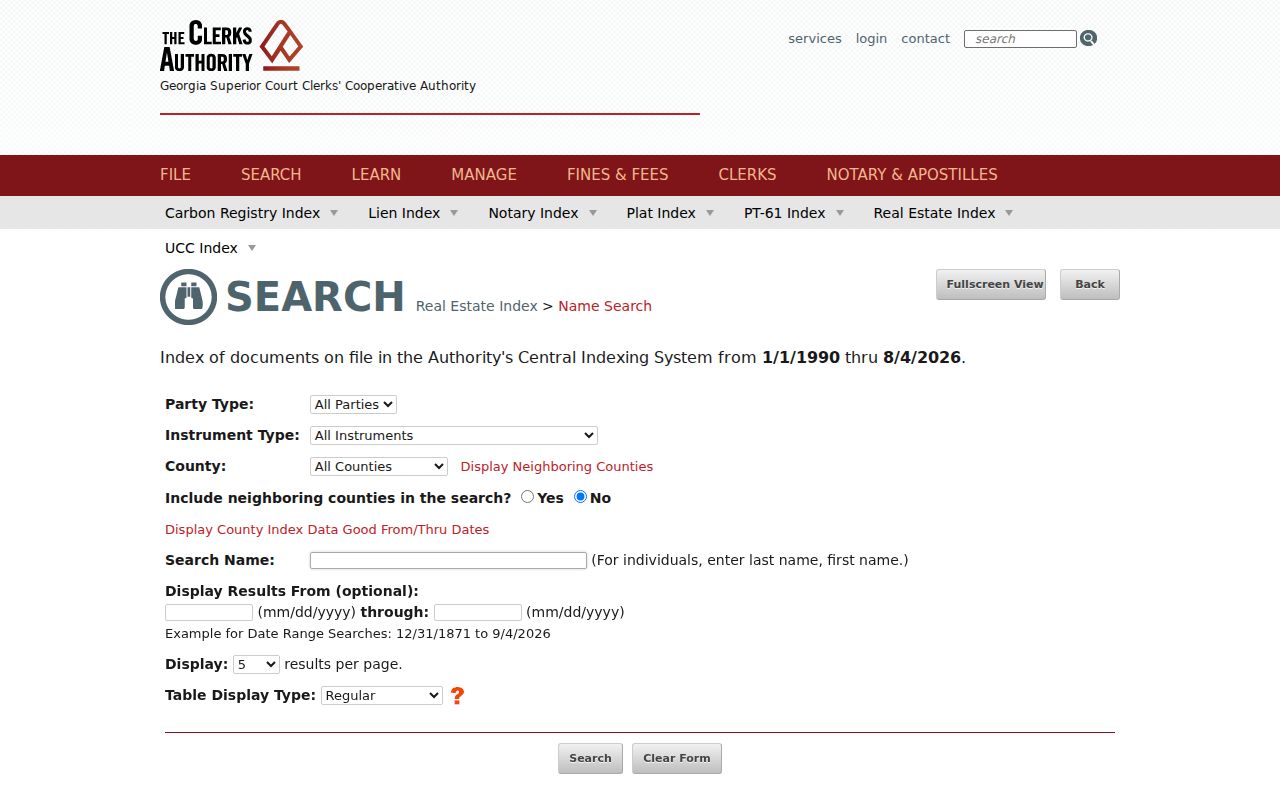
An index hit is only a locator. Full images, legal text, and certified copies may require an account or a request to the Clerk's Deed Division.
Resolve LLC Trust and Estate Names
When the parcel card names an LLC, take the exact legal name. Use Georgia Secretary of State records. Check its status, registered agent, and principal office. But remember that an agent is not automatically the beneficial owner of the land. Then confirm the LLC appears as grantee on the newest deed before drawing any conclusion.
Trusts and estates demand slower work. A deed may name a trustee, executor, administrator, or someone acting in a stated capacity. Probate records show who held authority to act. That person is still not automatically the beneficial owner. Copy the capacity language exactly as the instrument records it.
- Owner of record
- The party named in the county's published tax record.
- Title
- The legal ownership interest, which may require review beyond one public index.
- Situs address
- The physical location assigned to the parcel.
- Mailing address
- The place selected for tax notices and correspondence.
Use Four Dates for Ownership
A careful Laurens owner check writes down four dates: deed execution, deed recording, and the assessor tax year or digest publication. It also notes the day you ran the search. A sale can be signed one day and recorded much later. Until the published roll changes, the assessor may still show the prior owner.
The county publishes no fixed update lag. State the dates plainly instead of assuming qPublic refreshes instantly or on a schedule. When the tax roll and newest deed disagree, contact both offices. Give them the parcel number and the deed reference.
Execution and recording are not the same thing. One marks the day the parties signed. The other marks the day the clerk accepted the instrument into the public record. The assessor tax year adds a third time frame entirely. With all four dates written beside the owner names, a recent transfer explains itself. Neither office has to be called wrong.
Contact a Laurens Owner Lawfully
The tax mailing field is the least speculative public route for reaching an owner. Send a neutral letter addressed to the owner name exactly as published. A mailing address is not a residence. Protected personal data should stay private. No one should use these records to harass another person.
Commercial people-search databases merge names, addresses, and relatives from uncertain sources. That makes them weaker than the assessor-and-deed method for parcel ownership. County records can hold errors too. Verification still matters.
For buying, selling, lending, inheritance, or a boundary dispute, a neutral mailing letter is only the first contact. Get the deed image and the professional help the transaction deserves. Public owner data was never meant to support claims about a person's finances, family, residence, or intent.
Limit a Laurens Owner Conclusion
A public lookup answers the first question: who the Laurens County assessor lists as owner. It also shows who took title under the recorded deed. That is where its reach ends. No search catches unrecorded interests, resolves rival claims, or untangles every trust provision. GIS lines help you find the parcel. But the deed controls what land actually changed hands. Only a full title examination can close those gaps.
Georgia law shields certain fields from public view. Social Security numbers, bank account details, medical facts, full birth dates, and some protected addresses stay off limits. So treat access as a tool rather than a license to republish. Ask only for the records your parcel question truly needs.
Ownership limit. An assessor name is not a title opinion. Confirm the newest deed and seek professional title help when legal reliance matters.