
Read Laurens County Tax Records
Two offices divide the work. The qPublic tax digest is the county-linked parcel and value source, maintained by the Board of Assessors and publishing the most current digest for tax administration. The Tax Commissioner property search handles the bill side. Read both before concluding what was valued, what was exempt, and what remains due.
| Field | What It Shows | Where |
|---|---|---|
| Fair market value | Assessor's estimate of full value | qPublic parcel card |
| Assessed value | Georgia's taxable assessment level before exemptions | Assessor digest |
| Exemptions | Approved relief applied to the account | Assessor and bill |
| Tax bill and status | Charges, payments, balance, and year | Tax Commissioner |
| Tax district | Jurisdictions whose levies affect the bill | Parcel card and bill |
Georgia generally assesses taxable property at 40 percent of fair market value. Exemptions can shrink the base further. So can special classifications. A recorded sale price is a third number entirely, and it is found in conveyance evidence. It is no substitute for the assessor's figure. Compare the same parcel and the same tax year every time.
Apply Georgia's Forty Percent Level
The county's own tax information lays out the arithmetic: fair market value multiplied by 40 percent gives assessed value. Millage plus any valid exemption then shape the bill. A mill is simply one dollar of tax per thousand dollars of taxable assessed value. Treat the result as an administrative figure. It is not a promised sale price. It is also not an appraisal prepared for lending or purchase.
When two Laurens County records seem to disagree, check the year first. Then ask whether one figure is gross assessed value. Or the other may be net after exemptions. Finally, confirm the tax district itself. A Dublin mailing label alone proves nothing about which municipal tax district a parcel sits in.
Search the Laurens Assessment Roll
Start at the county-linked qPublic page and copy the parcel number exactly as shown. The vendor search does not always load smoothly. So use whatever address or owner controls the current interface exposes rather than assuming particular required fields. Match results by situs address, legal description, and parcel key. Name matches alone can mislead.
The Laurens qPublic landing page is the official county route to the assessment roll. Even a vendor challenge that interrupts access does not change that.
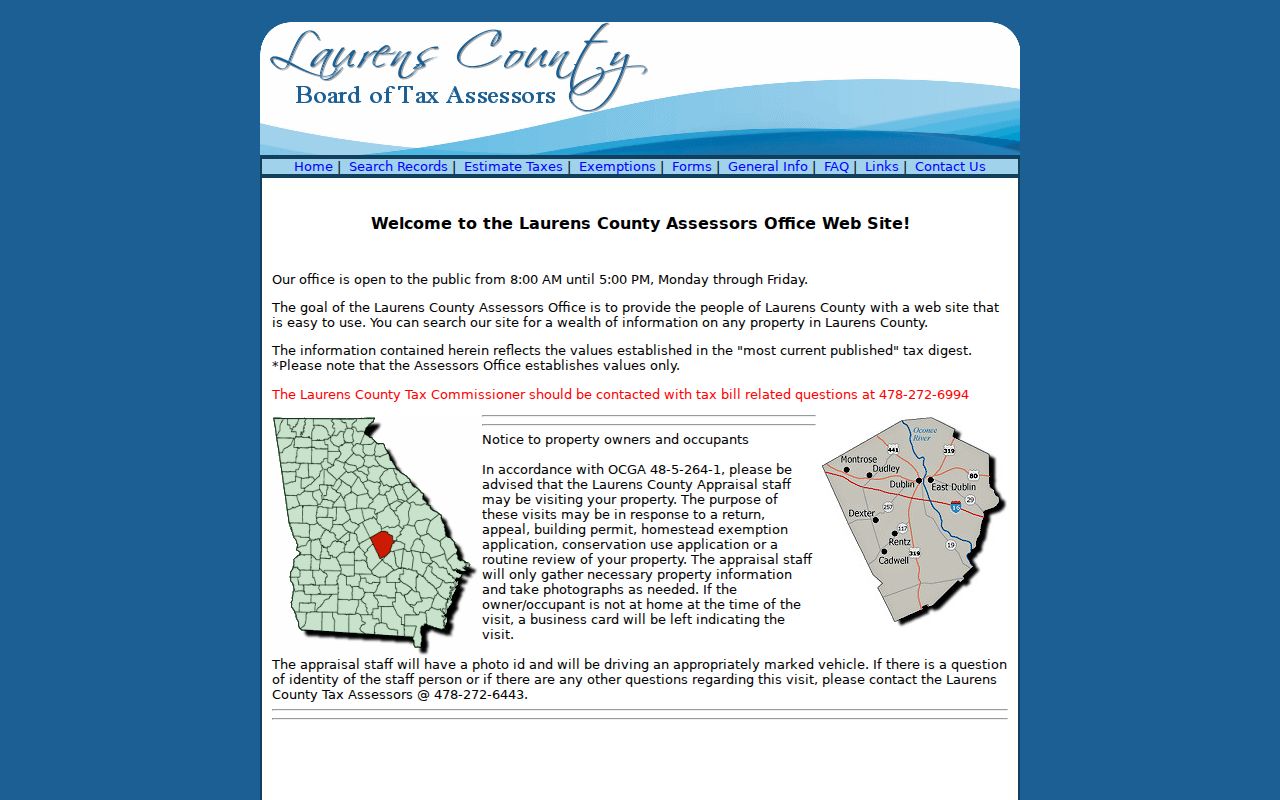
The qPublic page confirms the assessor connection. If the parcel card will not open, request the existing card or data fields from the Assessors Office under the Georgia Open Records Act.
Retrieve a Laurens County Tax Bill
Treat the Tax Commissioner's system as the bill and payment record, not the title record. Search one tax year at a time where the interface allows. Keep the account or parcel identifier, bill year, original charge, payments, and current balance together in one place. Convenience charges and payment-gateway details live on a separate payment page, so confirm them with that office before relying on any total.
- Find the parcel key and tax year in the assessor record.
- Run that key through the Tax Commissioner property search.
- Record the charge, payment entries, balance, and date viewed.
- Compare exemptions and district fields with the matching assessor year.
- Assessed value
- The percentage of fair market value used before exemption adjustments.
- Millage
- The levy expressed as tax per thousand dollars of taxable value.
- Homestead exemption
- Approved relief tied to a qualifying primary residence.
- Tax fifa
- A public tax execution recorded after qualifying unpaid taxes become delinquent.
The official property-tax lookup appears in the captured source below.
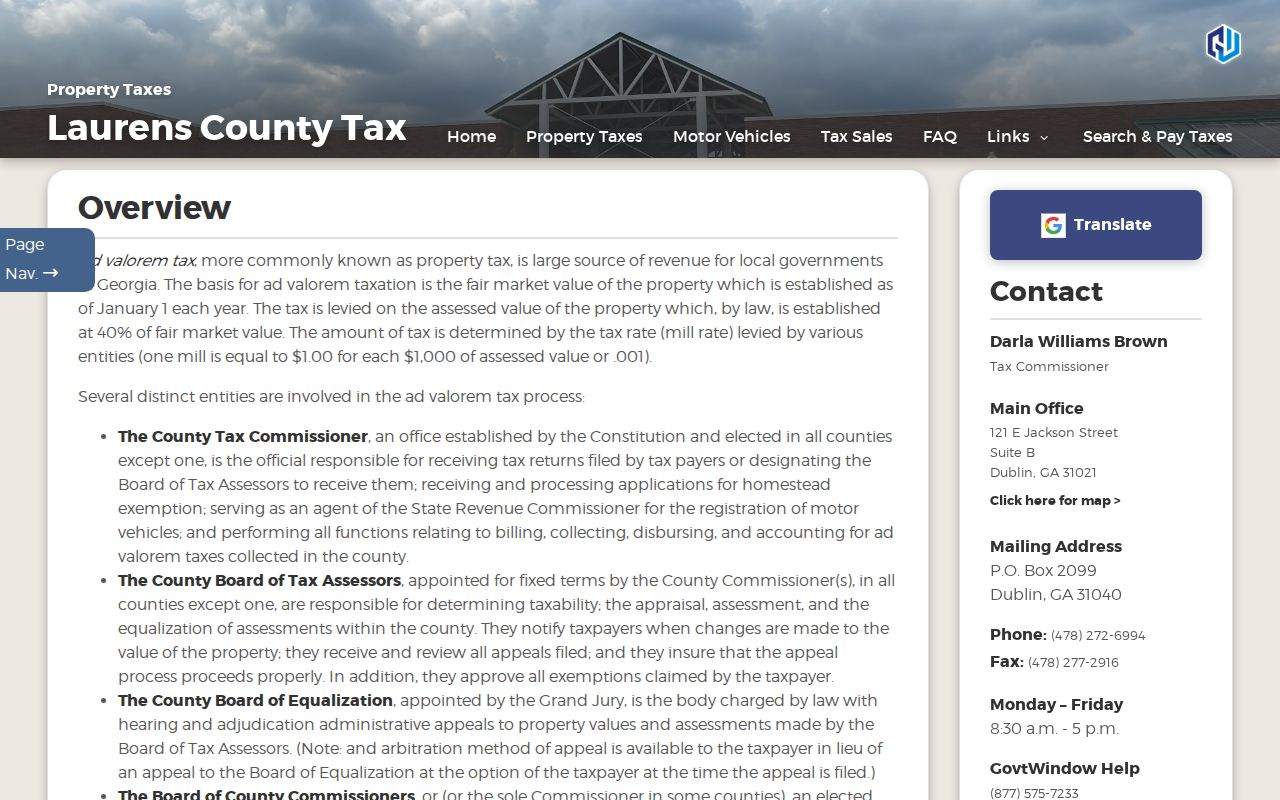
A result from the payment system is a dated account snapshot. It establishes neither title nor the absence of a later posted payment.
Check Laurens Property Tax Exemptions
Homestead and other preferential programs can change taxable value without touching fair market value. Confirm that an exemption appears on the parcel card. It should also appear in the bill calculation for that same year. Applications and eligibility decisions rest with the Laurens County Board of Assessors. The deed clerk does not handle them.
Keep proof of filing and any written approval. If an owner moves, changes use, or transfers title, ask whether the exemption still applies. The same question applies if the parcel is held through an entity. Never assume an exemption survives a sale.
Note: An exemption reduces a tax base only when the assessor has approved it for that parcel and year.
Separate Delinquency From a Tax Sale
Unpaid taxes can fall more than 30 days past due. At that point they may become a tax fifa, according to the county FAQ. The fifa gets recorded in Superior Court. A bill balance, a recorded fifa, a sale notice, and a tax-sale deed mark distinct stages. Never call land sold just because one of these records exists.
Search the GSCCCA lien index for both the taxpayer and the owner. Then look for a release or cancellation. The county publishes no current public sale list or bid rules through a general property search. Ask the Tax Commissioner's tax-sales contact for the notice source, parcel list, date, and redemption records.
Place County Digest Growth in Context
The countywide digest tells a big story in Laurens County. Published real and personal digest value climbed from $1,535,732,451 in 2020 to $2,362,448,058 in 2025. That growth frames the local tax base nicely. It says nothing firm about any single home, district, or city inside the county. Those can move at very different rates.
One caution matters here. Laurens County has also posted a current-digest notice for 2026. A new digest can replace the prior published tax roll. Date-stamp every value comparison you make. For a true parcel trend, pull the same value fields and exemption status year by year rather than applying the countywide percentage to one property.
A careful worksheet earns its keep. Give each annual entry its source, tax year, fair market value, assessed value, exemption amount, taxable value, and district. Note whether each figure came from a live parcel card, a tax bill, or a published digest. That small habit keeps a countywide digest total from masquerading as a parcel appraisal. It also makes later updates easy to spot.
Appeal a Laurens County Assessment
Georgia law lets owners appeal value, uniformity, or taxability once the assessment notice arrives. Laurens County sends these appeals to the Board of Assessors. The clock is short. You have 45 days from the notice date. The date printed on the notice controls. The state PT-311A form carries the essentials. It lists the property, owner, appeal ground, requested value, and the appeal route chosen.
Build the case before filing. A value appeal can rest on comparable sales, photographs, repair estimates, or a professional appraisal. Records showing a wrong parcel characteristic also work. A uniformity claim works differently. Compare similarly situated parcels using the same tax year and the same fields. Depending on statutory conditions, several routes are available. Options include the county Board of Equalization, arbitration, or a hearing officer.
Appeal window. File within 45 days of the assessment notice. Paying a tax bill or disputing a payment does not replace a timely value appeal.
For local ground truth, the county's property-tax FAQ records official guidance on tax formulas, appeals, homestead matters, and fifas.
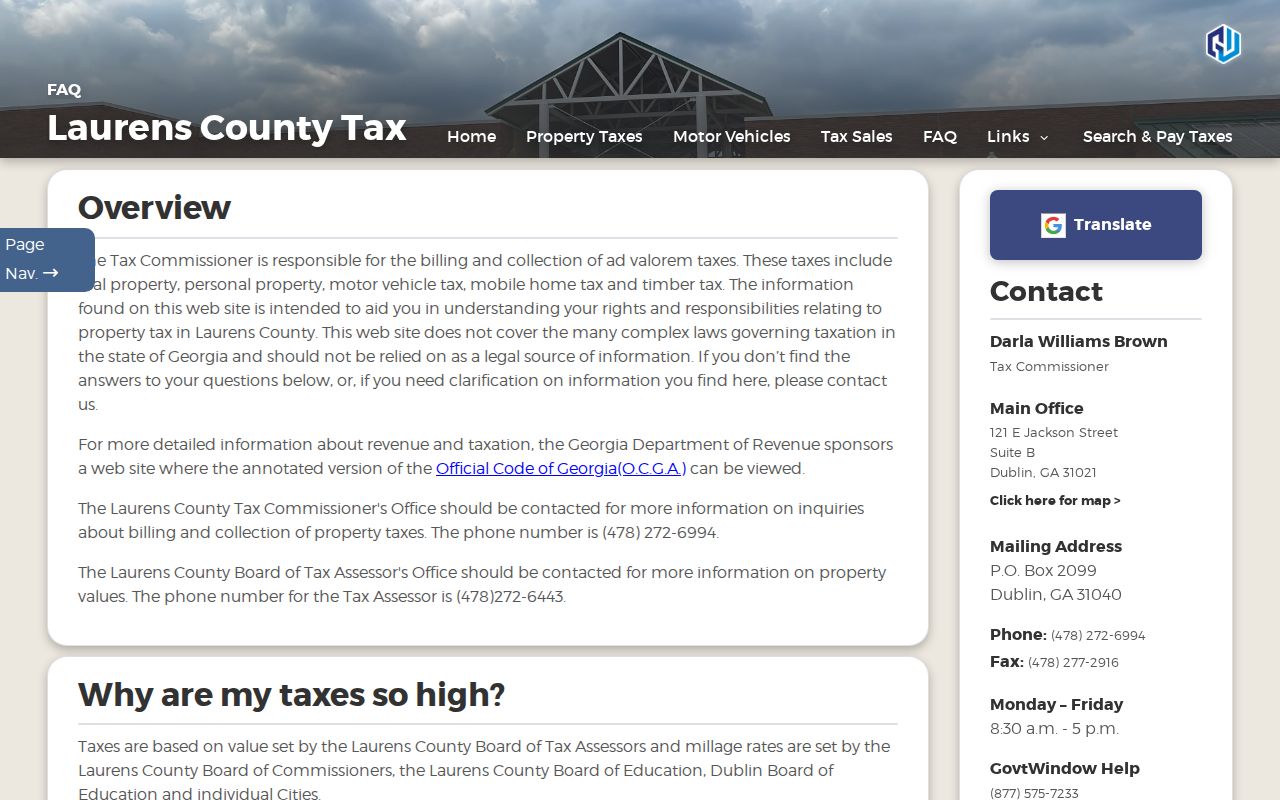
Treat that page as a starting point. A live appeal follows the notice and the assessor's current instructions, not any dated document.